The Court of the Okuapehene
Akropong is the seat of the Okuapehene, paramount chief of the Akuapem state — a confederation of hill towns that came together in the 1730s and has been governed from this ridge ever since. This room traces that line.
c. 1730s
The Akuapem state is born
The hill towns unite under one paramount stool, seated at Akropong.
1835
The Basel Mission arrives
Missionaries settle on the ridge; Akropong becomes a centre of learning and the written Twi language.
1848
A college on the hill
The Presbyterian teacher-training college opens at Akropong — among the oldest in West Africa.
Yearly
Odwira leads the calendar
Akropong opens the festival season for all the Akuapem towns.
2024
Shoreline looks to Akropong
Across the ocean, a city council begins discussing a new sister city on the ridge.
2026
The association is founded
ASCA adopts its constitution and this museum opens its doors — everywhere at once.
Room 02 — The festival
Odwira: the year is washed clean
Every year Akropong leads the Akuapem towns in Odwira — a week of purification, remembrance and homecoming. The ban on noise is lifted, the ancestral stools are honoured, the new yam comes to town, and everyone who ever left finds their way back up the ridge.
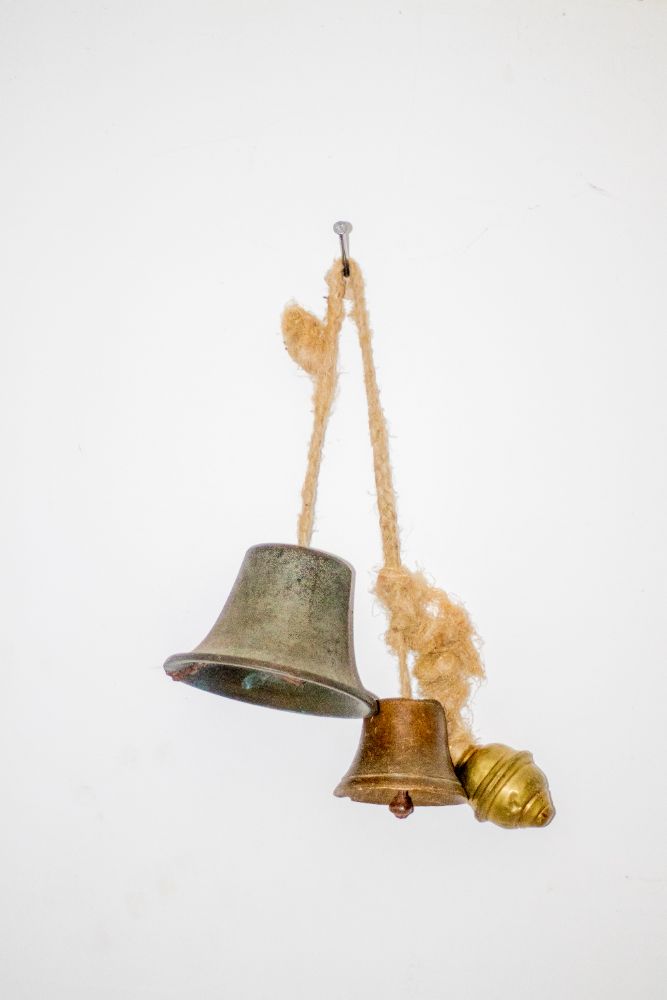
The bells
Rung to open the ban on noise and to call the town to order. Collection of Akropong-Akuapem.
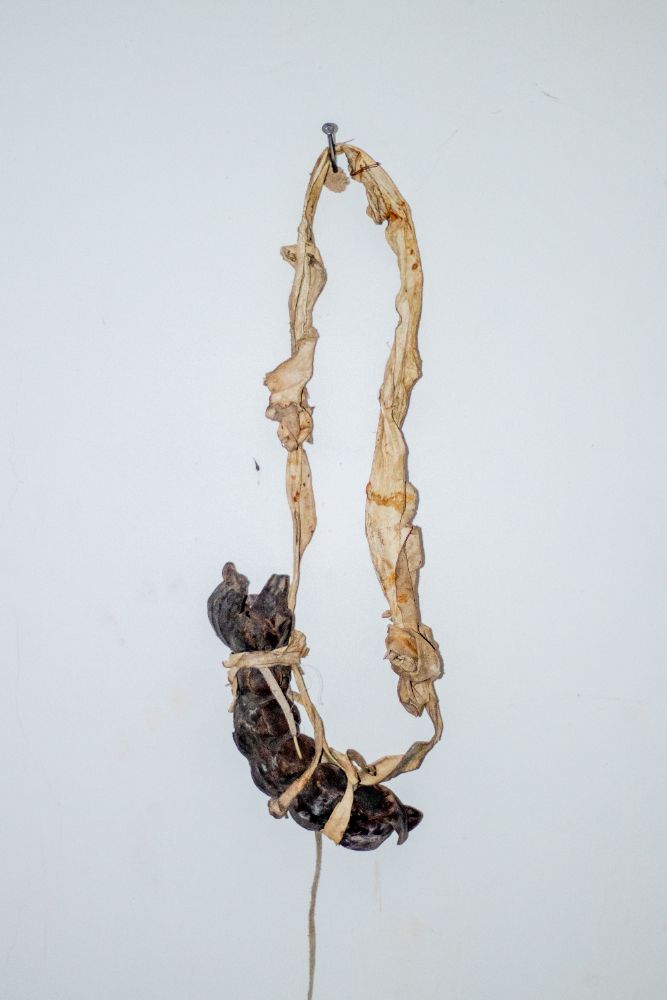
The purifying herbs
Bound herbs kept for the washing of the stools — the act Odwira is named for.
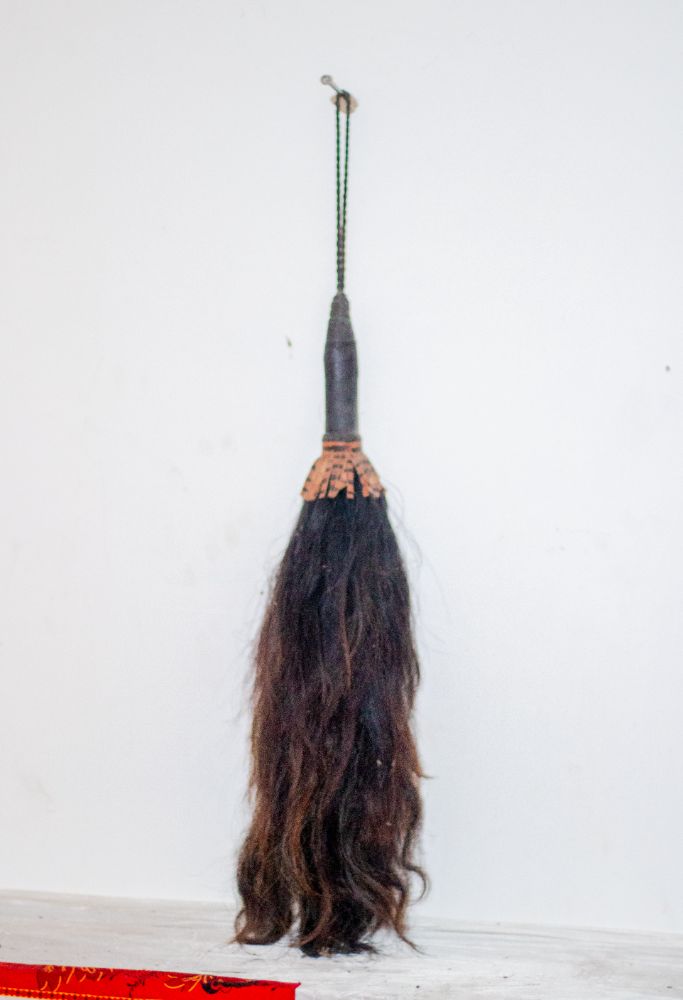
The horsetail whisk
Carried beside the chief in procession, sweeping the air before him.
Room 03 — Material culture
The objects our hands made
Photographed against a plain wall in Akropong, object by object — seats of authority, the vessels of a household, cloth, drums and war dress. Hover any piece to read its entry.
Seats of authority
6 pieces
A stool holds the soul of a household; a brass-studded asipim chair seats the one who speaks for the state. These came out of the stool house together.
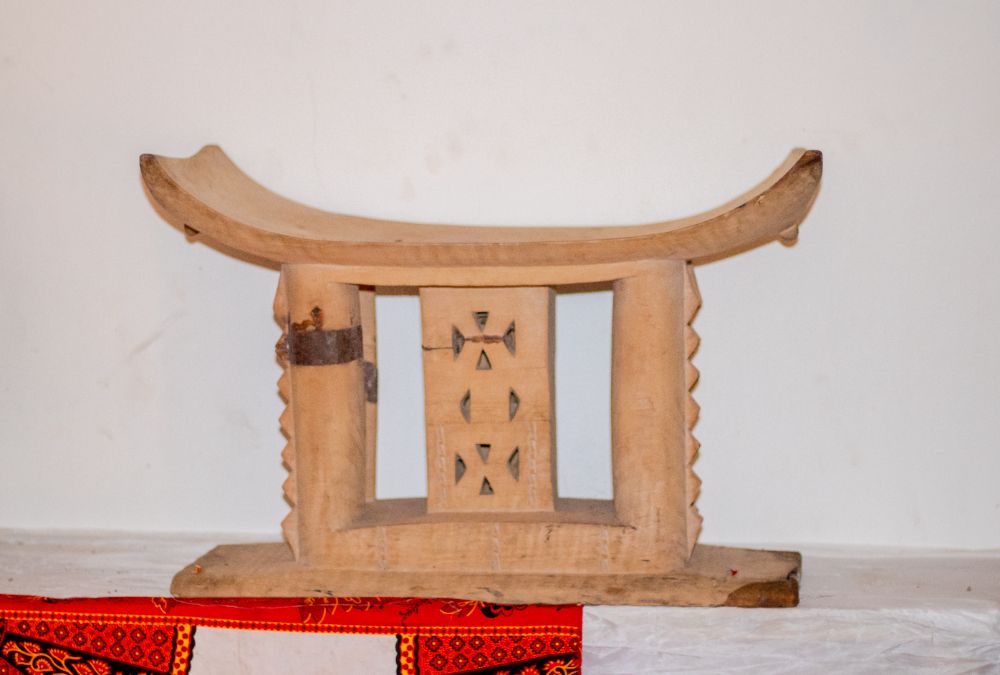
Akan stool
Carved from one block — five columns, a saddle seat, and adinkra piercings through the centre post.
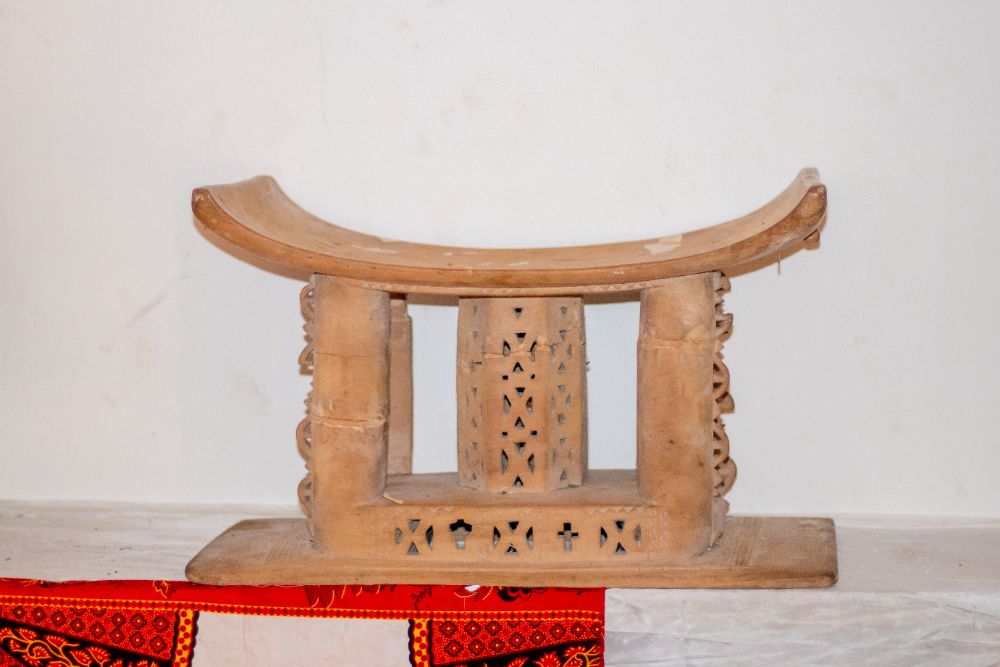
Stool, pierced panel
The openwork panel names the owner’s clan to anyone who knows how to read it.
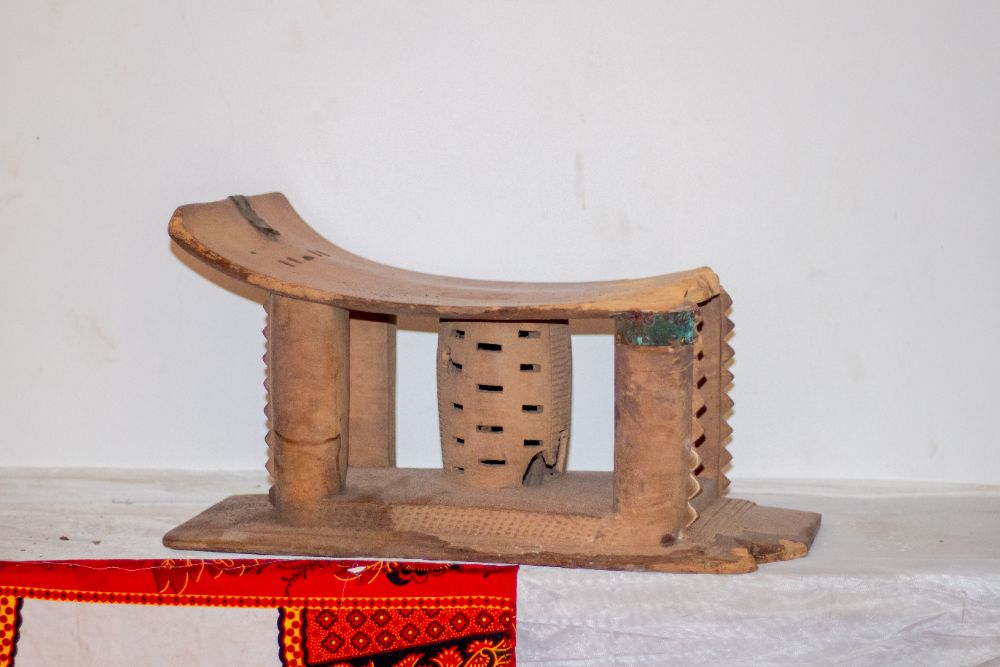
Stool, long in use
Worn smooth at the seat and patched with metal — evidence of generations, not damage.
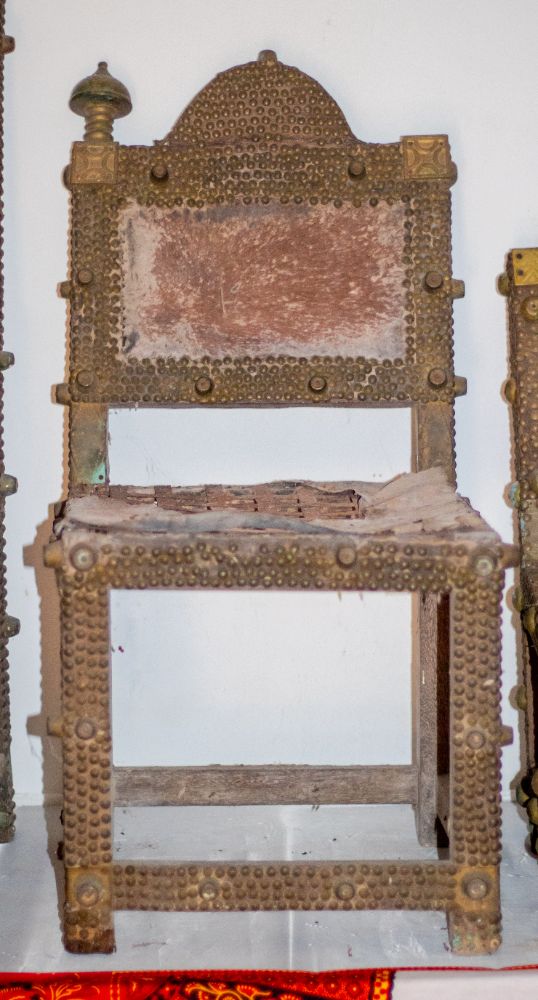
Asipim chair
Imported chair form remade in Akan terms: hide seat, brass studs, cast finials at the shoulders.
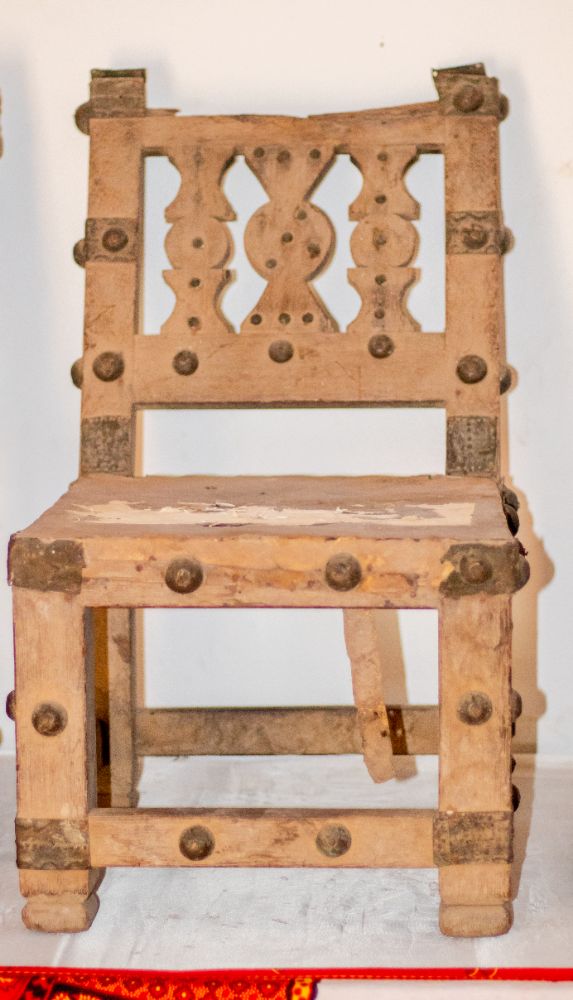
Chair, carved back
The splat carved in balusters and discs; brass plates at every joint.
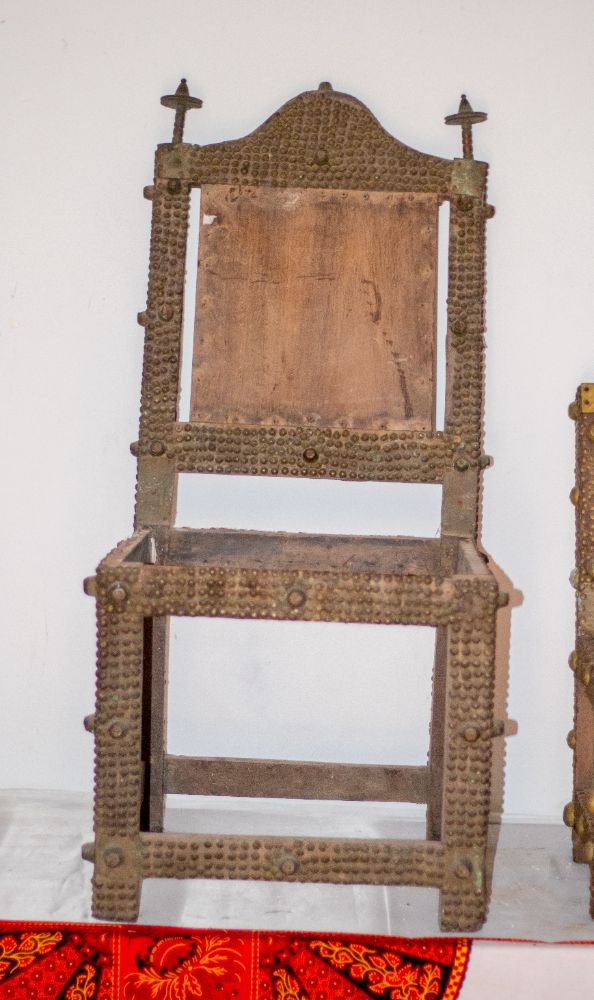
Chair, studded frame
Seen from behind — thousands of hand-set studs, and the empty frame where the hide has gone.
Vessels of the household
9 pieces
Blackened clay and beaten brass: what a compound cooked in, served from, and washed with. Everyday things, which is exactly why they rarely survive.
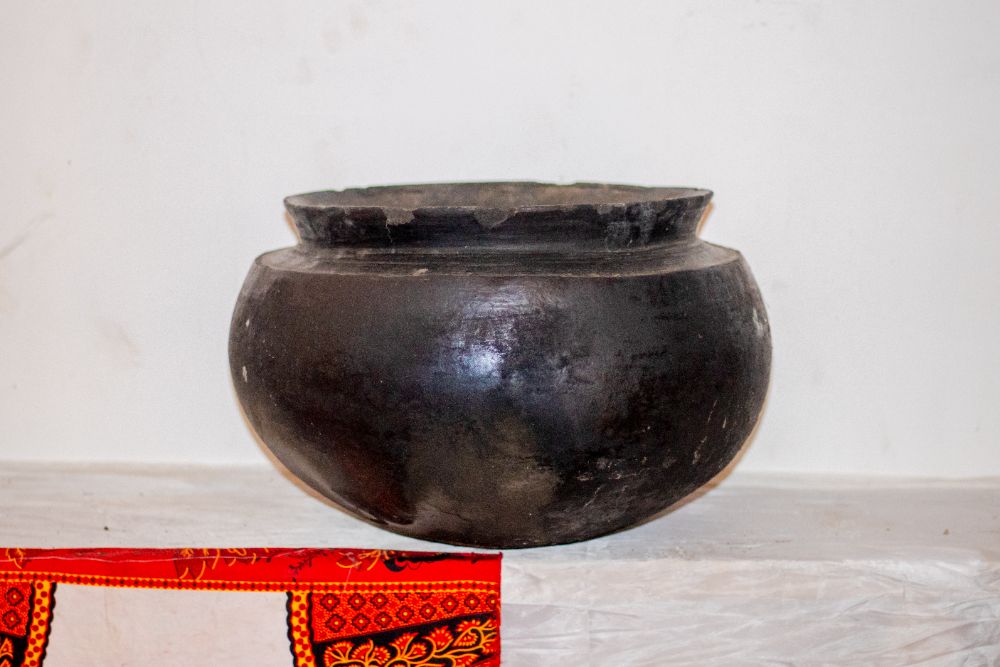
Cooking pot
Burnished black earthenware, wide-shouldered, fired in an open pit.
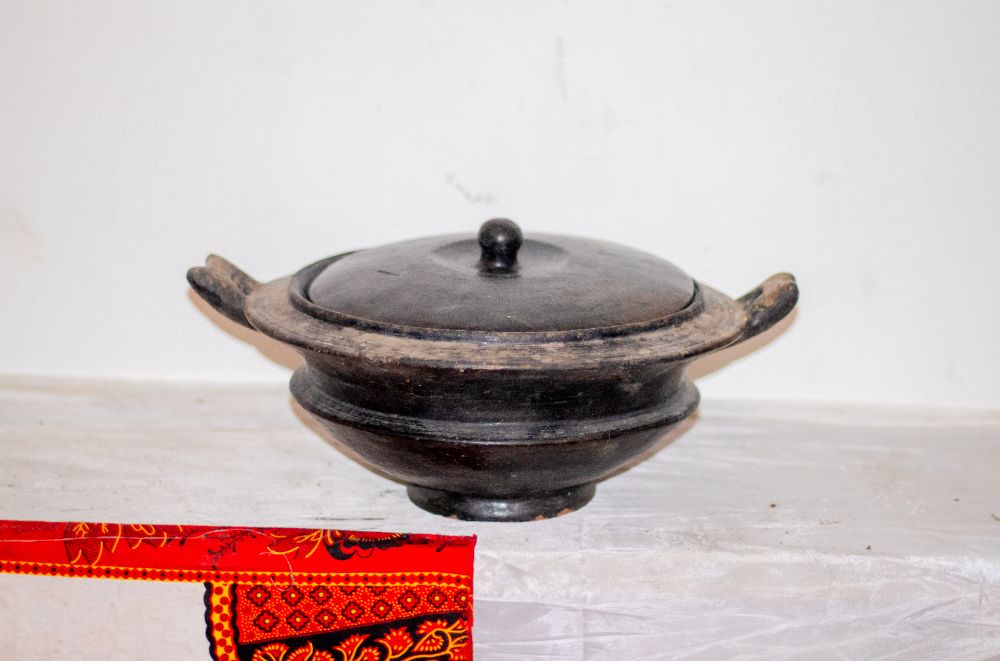
Lidded tureen
Two lugs and a turned lid — soup carried hot from the fire to the room.
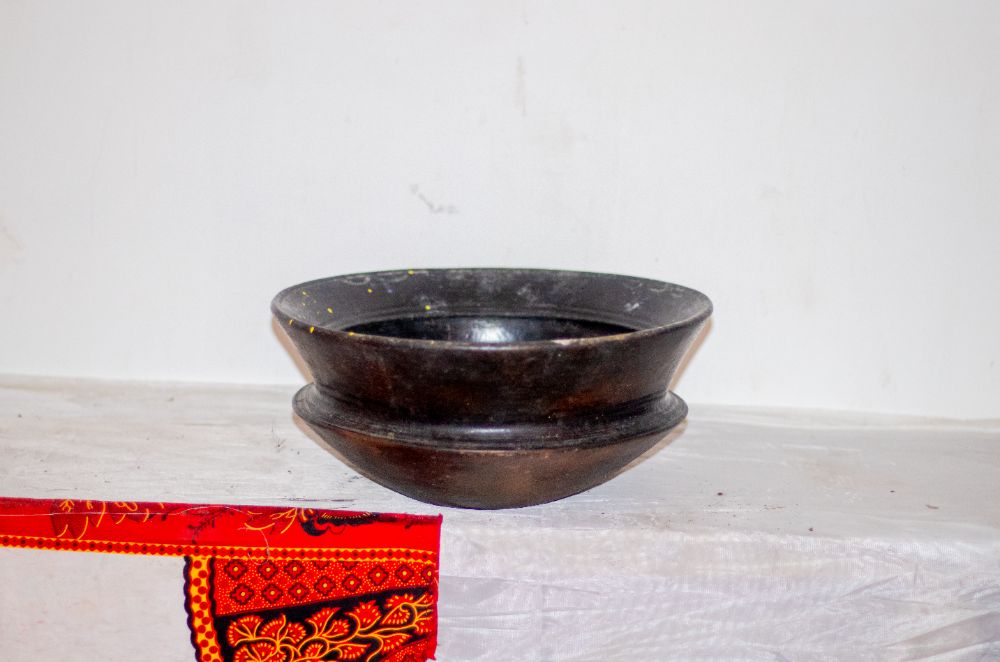
Eating bowl
The flared rim keeps the fingers clean; a household would own many.
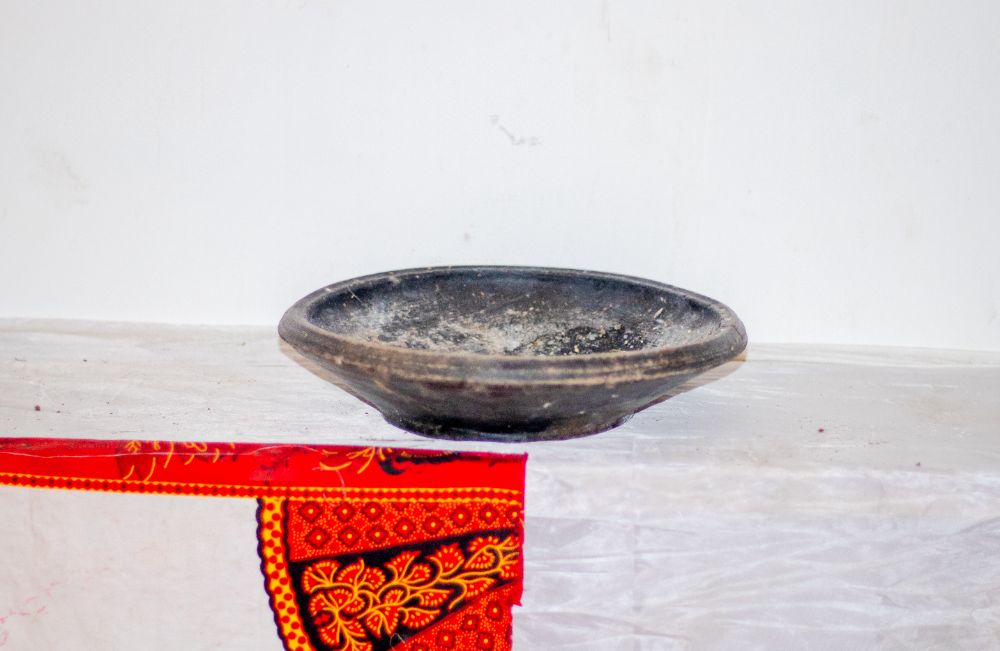
Shallow dish
For grinding pepper, or for offerings set down at the door.
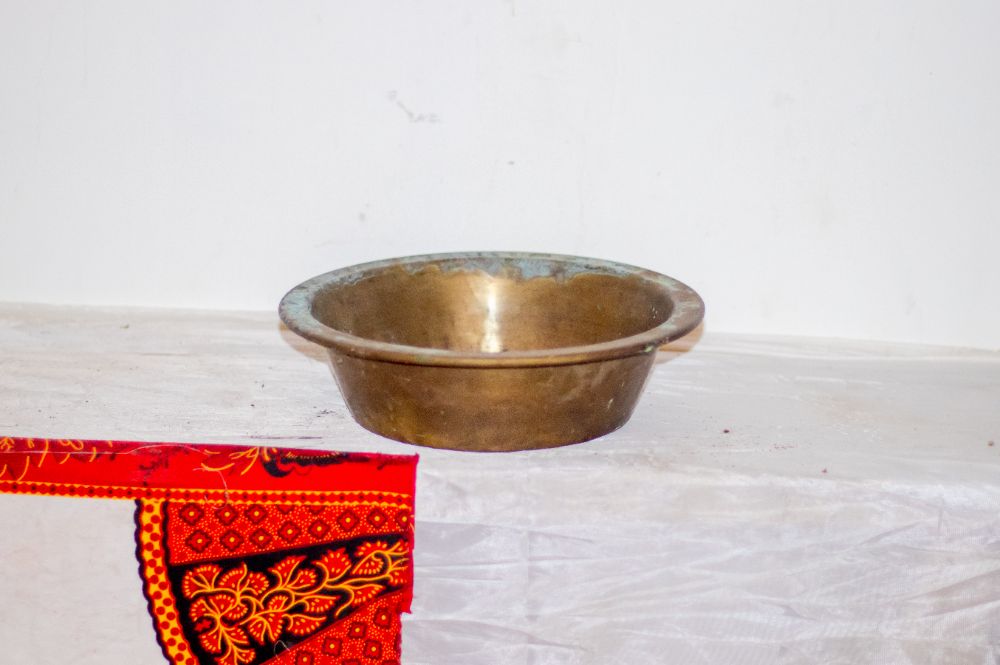
Brass basin
Beaten from sheet and turned at the rim — for washing hands before a meal.
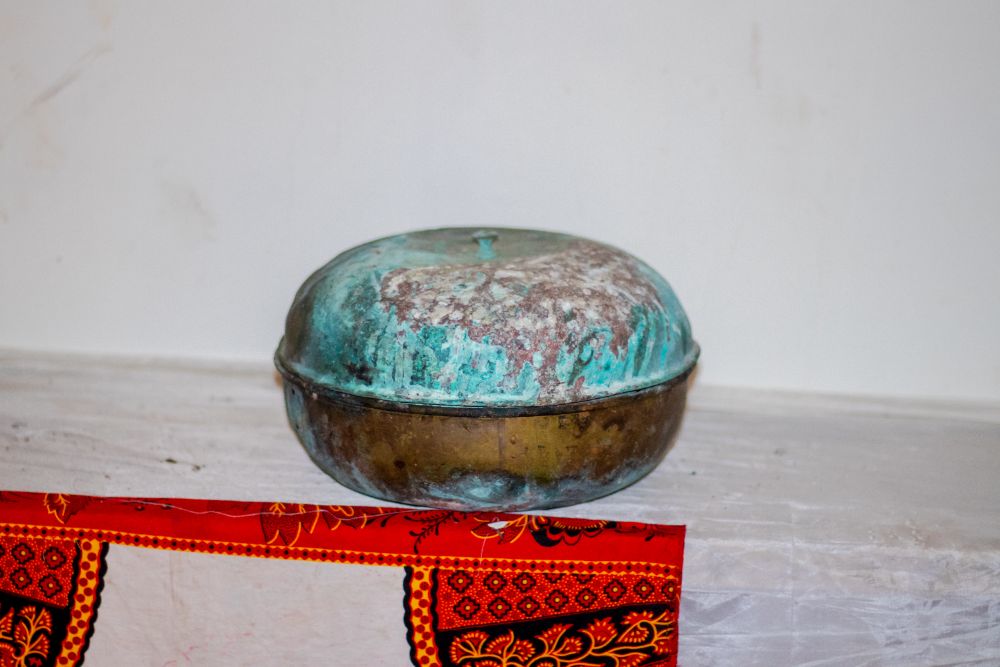
Covered brass bowl
Verdigris has taken the lid; the body still holds its polish.
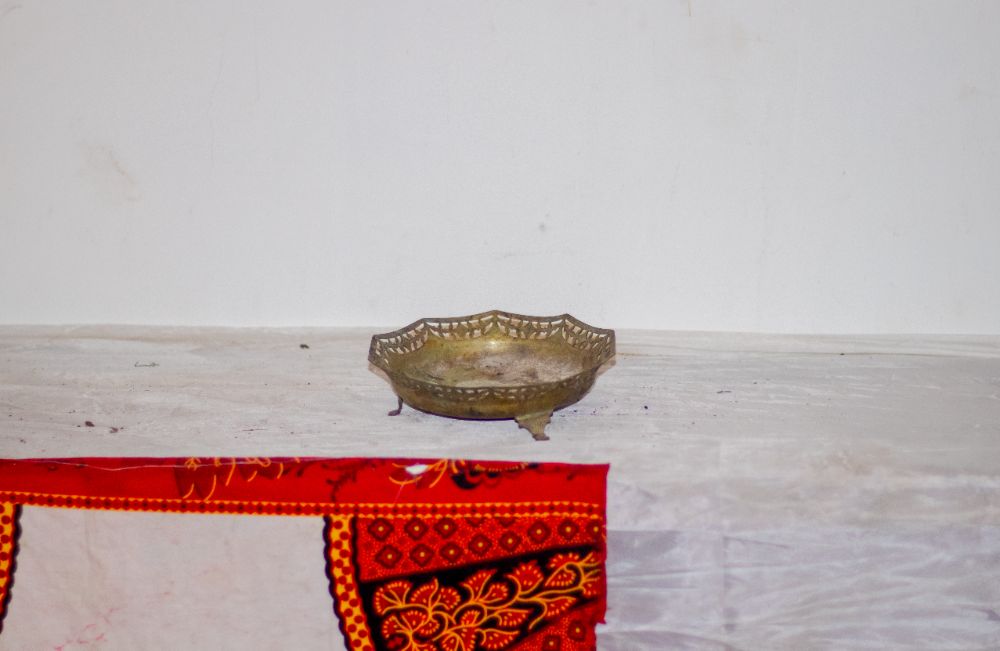
Footed dish, pierced rim
Three cast feet and a fretted border — a serving piece for guests.
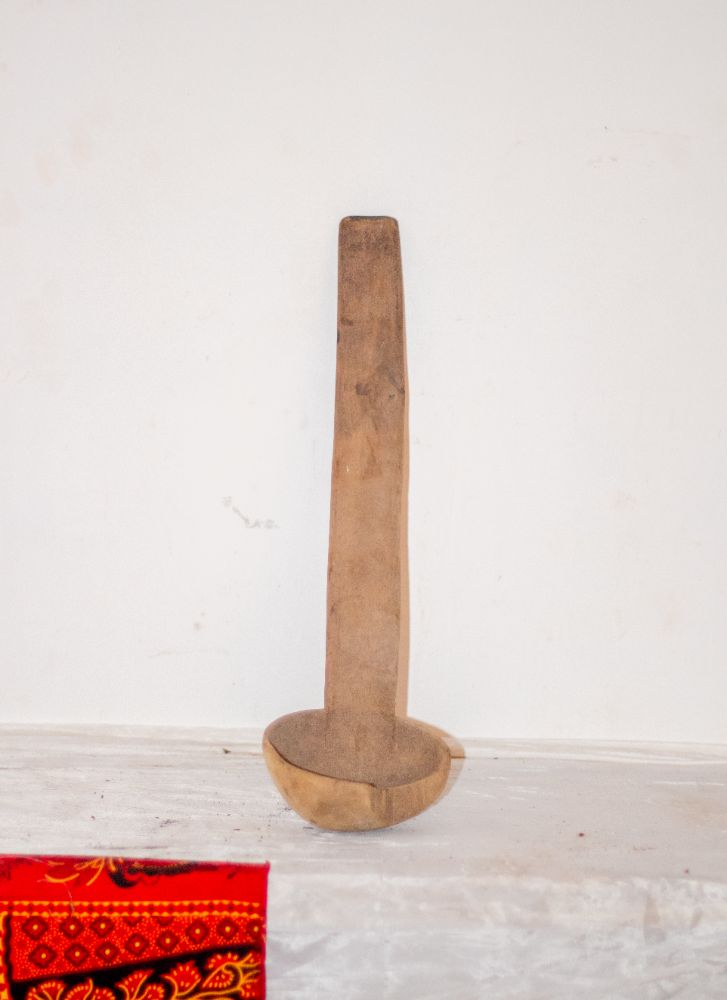
Wooden ladle
One piece of wood, thinned at the bowl by decades of stirring.
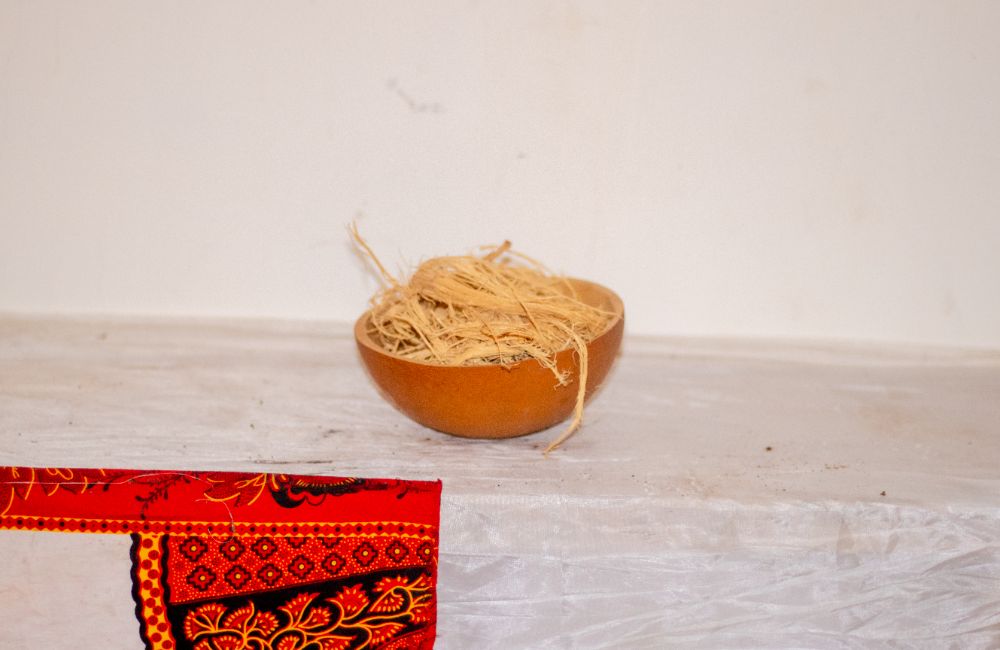
Gourd with raffia
A calabash half packed with raffia — a strainer for palm wine.
Cloth, drum and dress
7 pieces
Cloth is text and the drum is speech. Both are how Akropong said things that mattered before anything was written down.
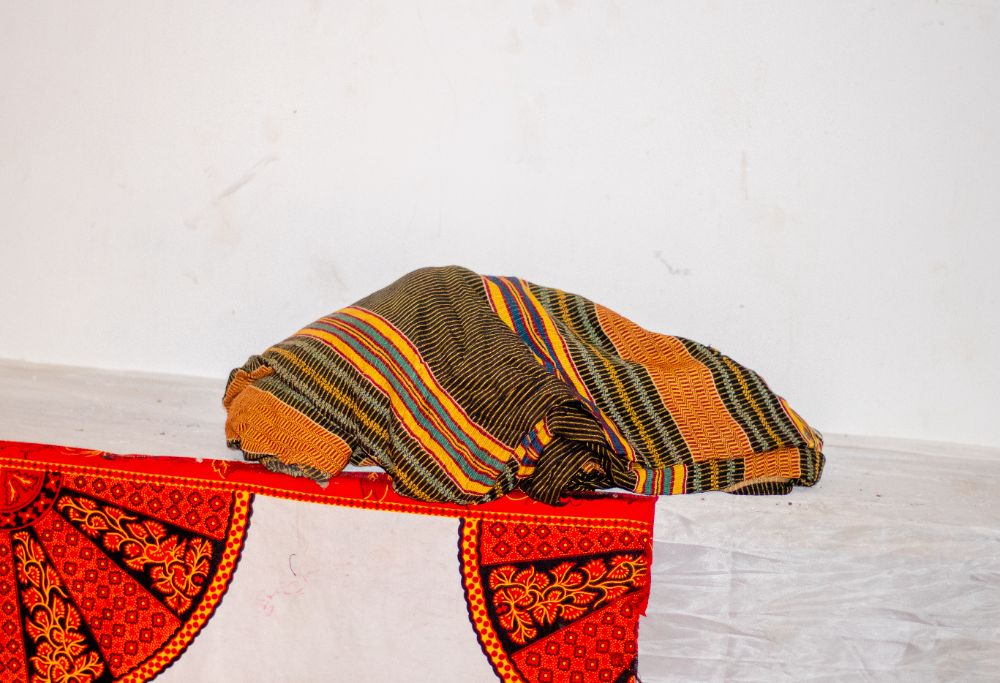
Kente cloth
Gold, black and green strips sewn edge to edge; folded as it is stored.
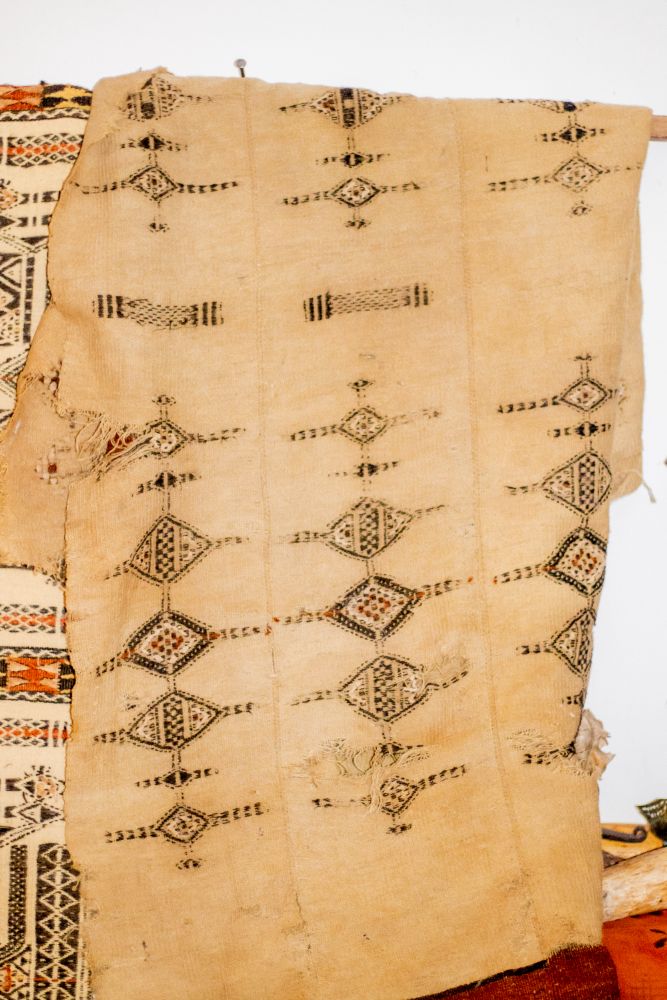
Cloth with diamond motifs
Hand-spun cotton, hand-stamped — mended, worn, and kept anyway.
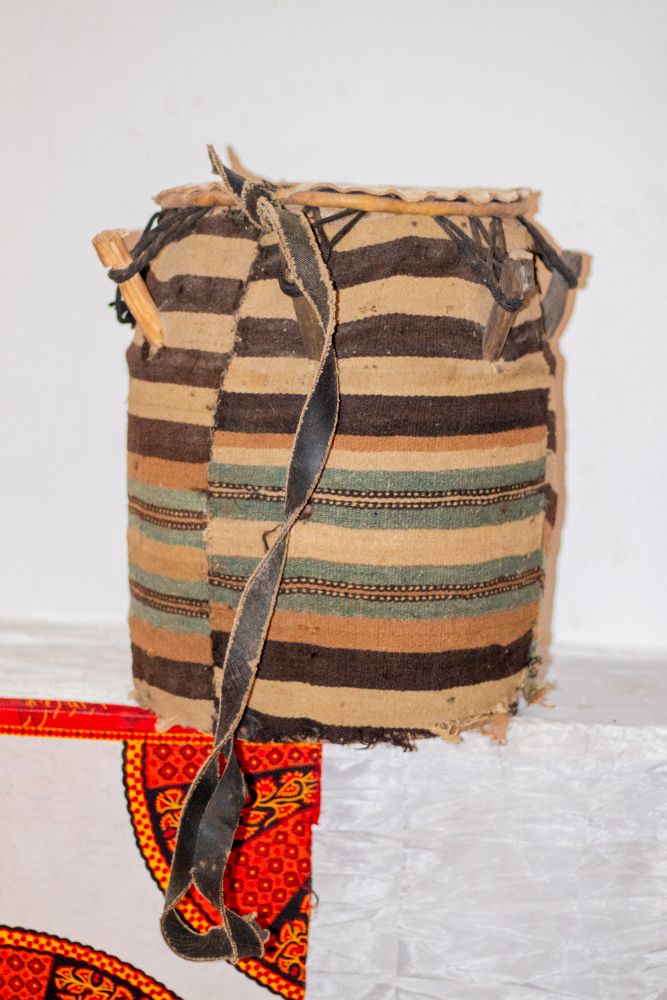
Drum in strip cloth
Peg-tuned, wrapped in woven cloth, carried on a leather strap.
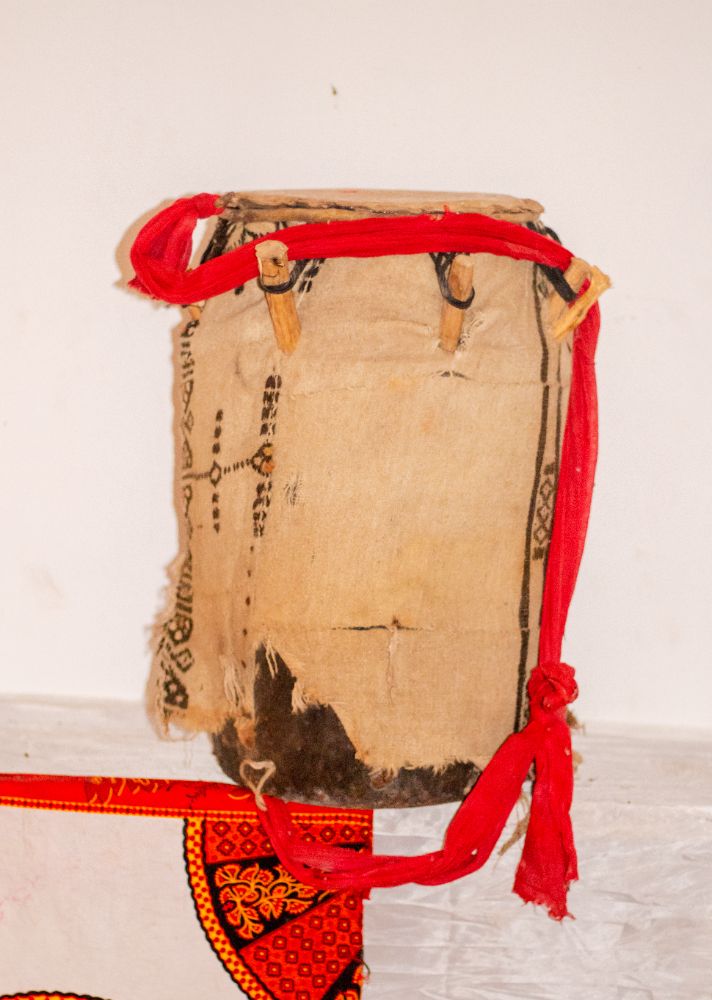
Drum, bound in red
Red bands mark it for mourning; the head is stretched hide, pegged and laced.
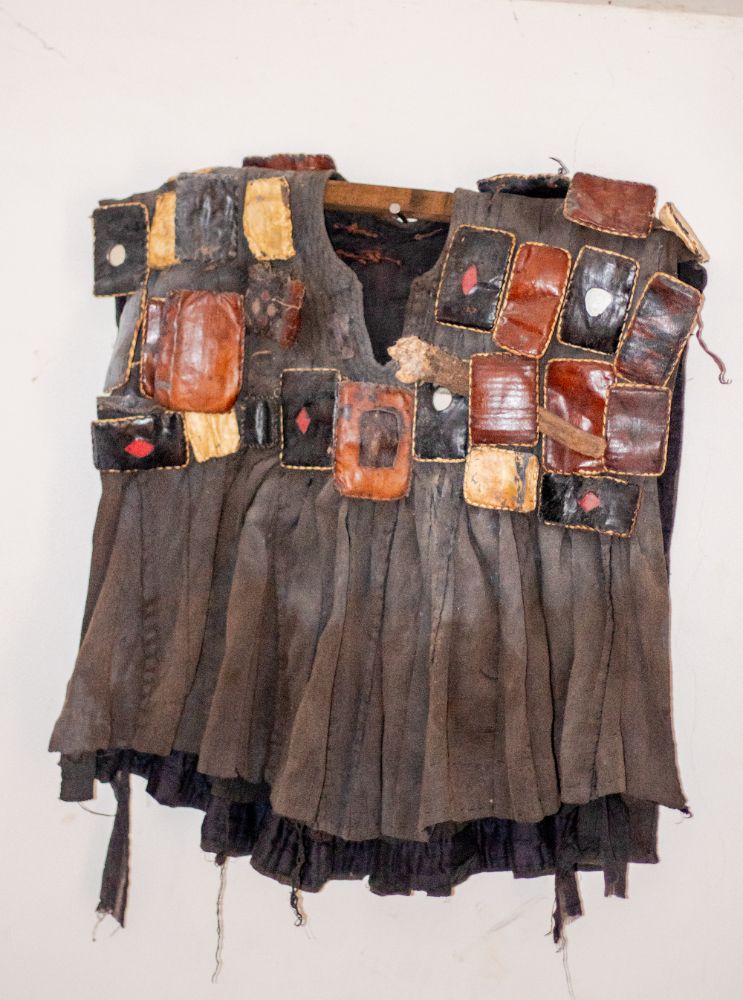
Batakari kese
The great war smock: leather packets sewn over the chest, each one a written prayer.
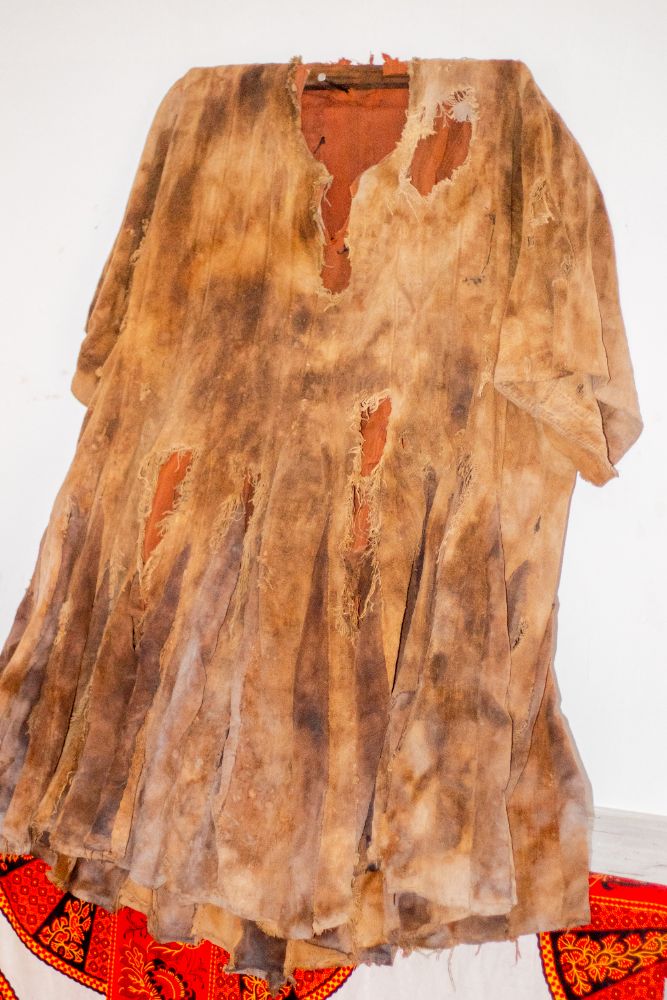
Smock, dye-stained
Torn to the lining and stained by earth-dye — the oldest garment in the collection.
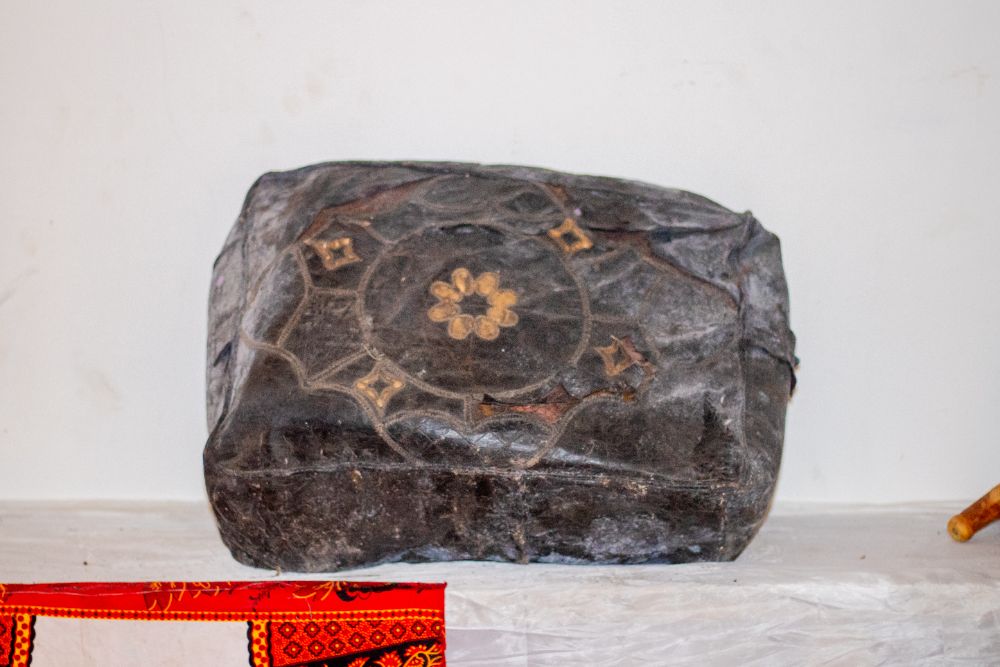
Leather cushion-box
Hide over a wooden core, tooled with a rosette in gold leaf.
Sound, iron and the shrine
8 pieces
Horns that announce, bells that gather, iron that clears the land, and small containers whose contents were nobody’s business but the custodian’s.
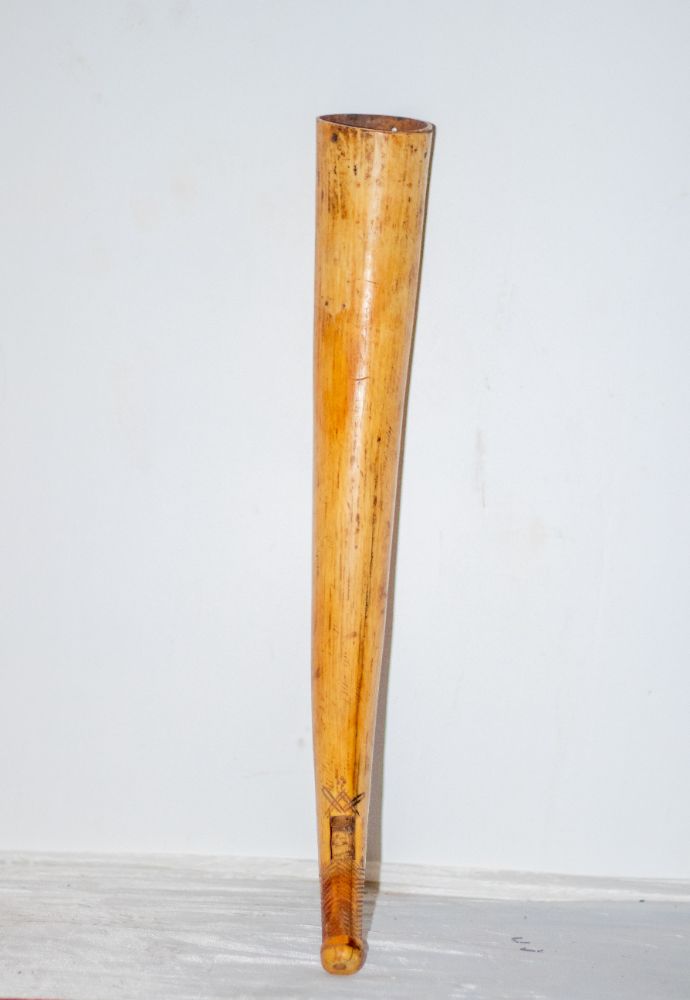
Ivory horn
Side-blown, incised at the mouthpiece — it plays the chief’s appellations, not a tune.
Cast bells
Three bells on one cord: the sound that opens a procession.
Horsetail whisk
Carried beside the chief, sweeping the air ahead of him.
Bound herbs
Kept for purification — the plants used when the stools are washed at Odwira.
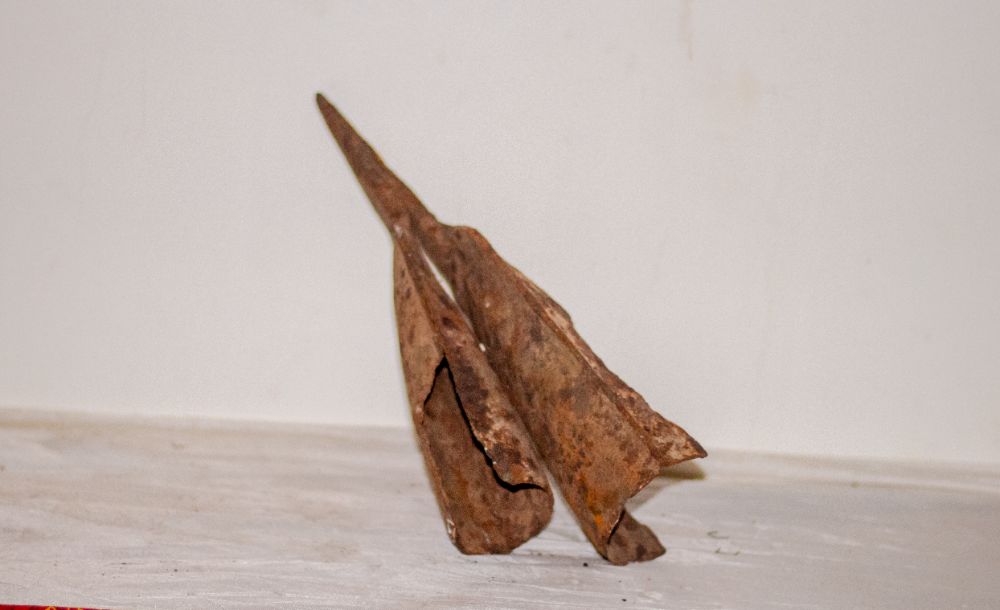
Iron blades
Forged locally; the split socket shows where a wooden haft once sat.
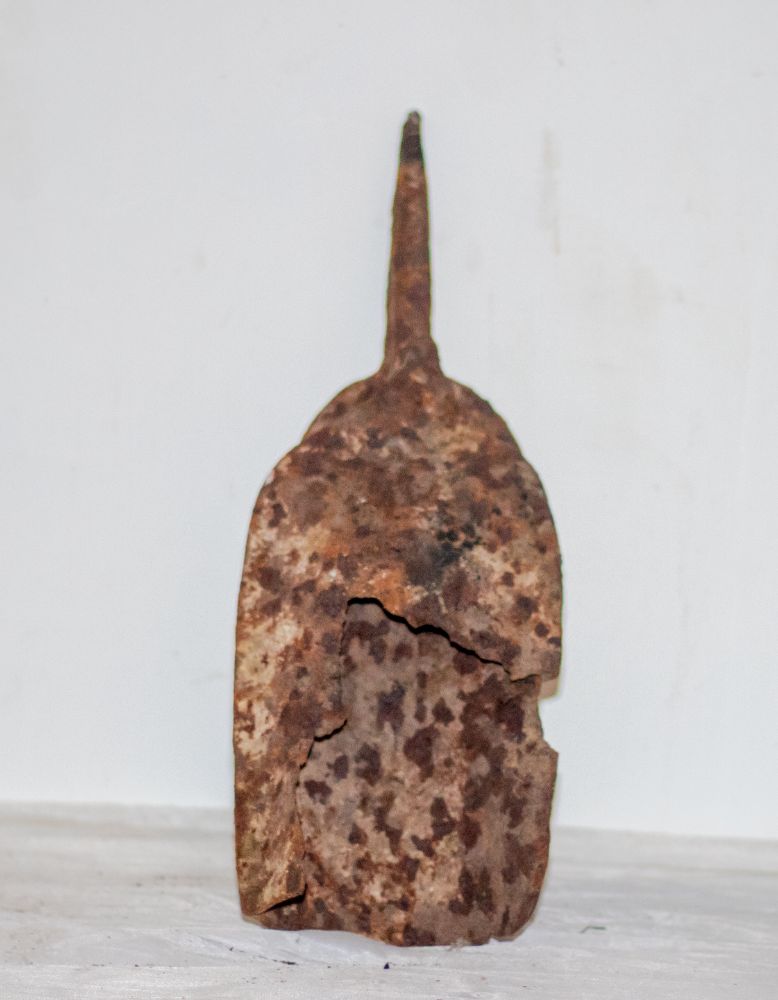
Hoe blade
The tool that made the farms that fed the ridge.
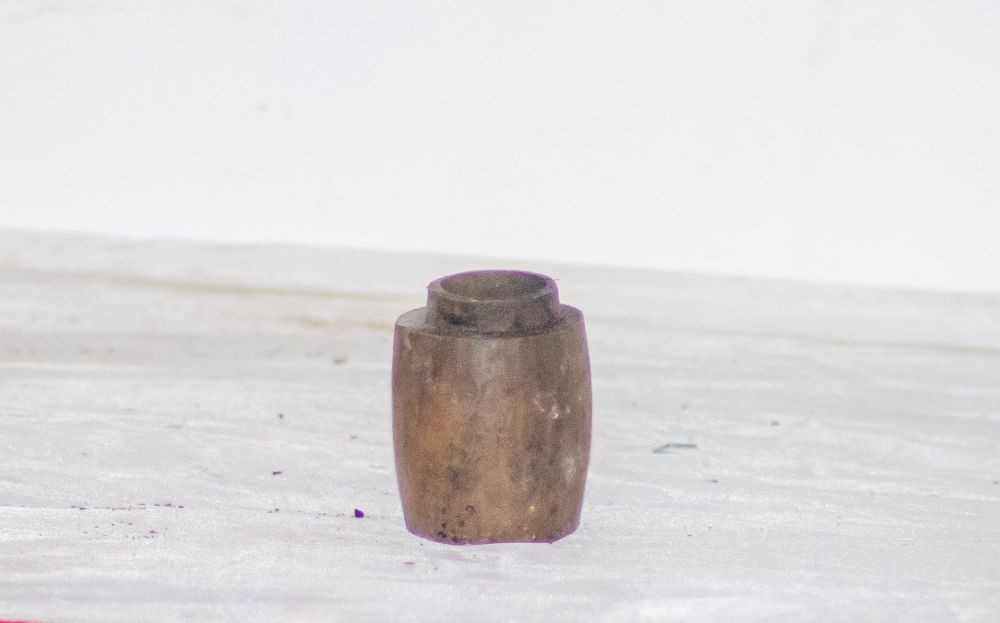
Small brass jar
A container for gold dust, or for something the custodian did not name.
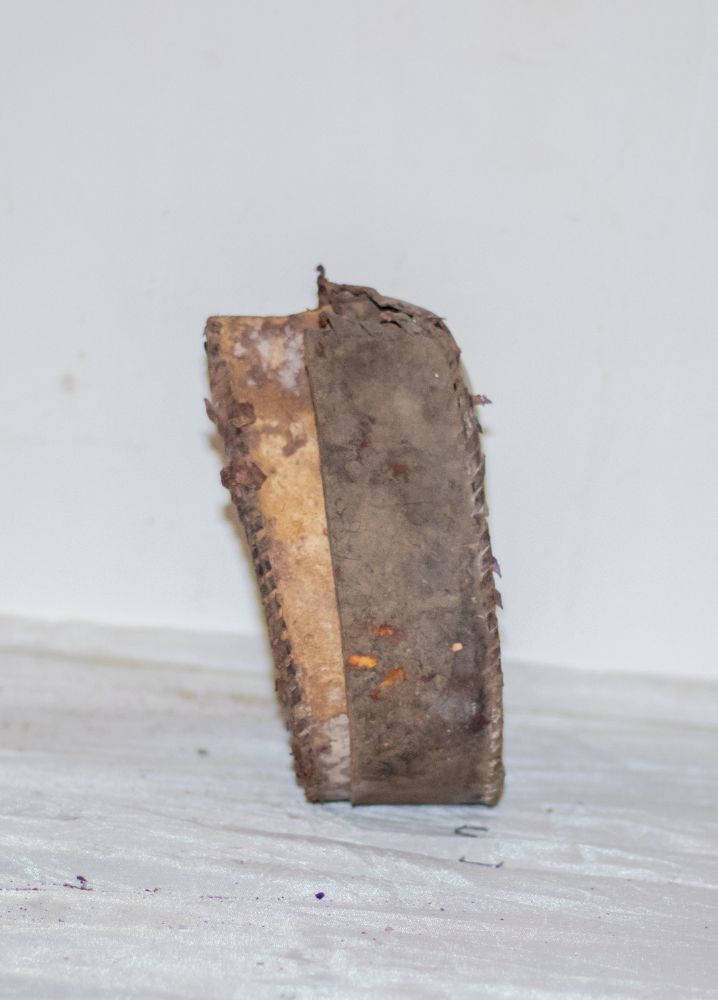
Stitched leather case
Hide stitched around a core, worn through at one end.
Room 04 — Photo archive
Akropong, then and now
The first accession photographs, taken as the collection was catalogued. Alongside them, an open call: the association is gathering pictures of Akropong from family albums on both sides of the ocean.
Batakari kese — the war smock
Sewn over with leather packets, each one a prayer carried into the field.
Drum, bound in red
Red cloth marks a drum kept for mourning and remembrance.
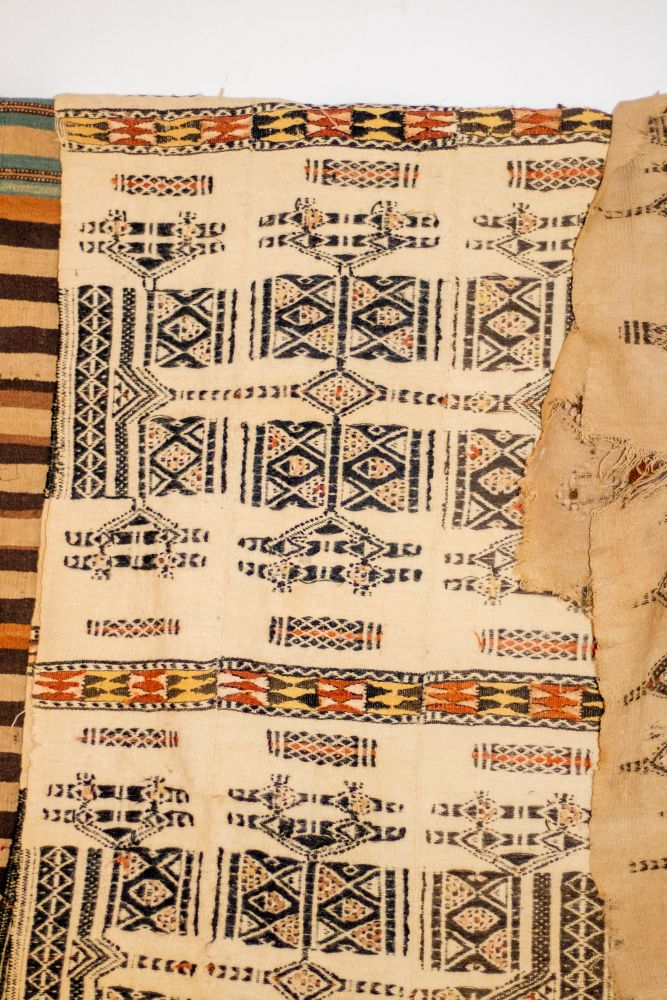
Woven panels
Strip-woven cloth, stitched panel to panel — the pattern reads across the seam.
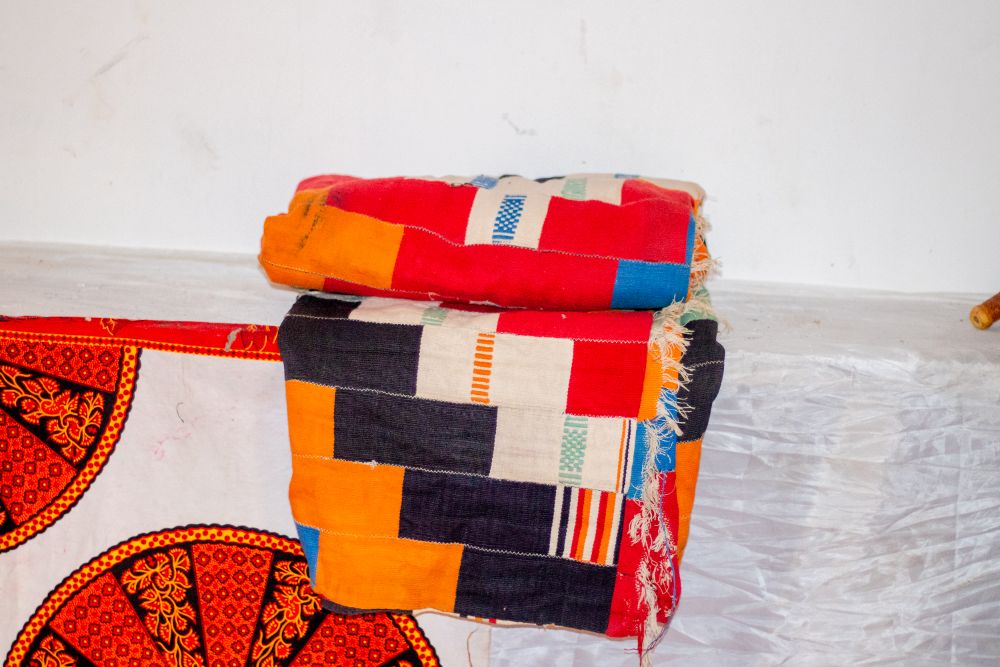
Kente, folded
Kept folded between wearings; brought out for festival and funeral.
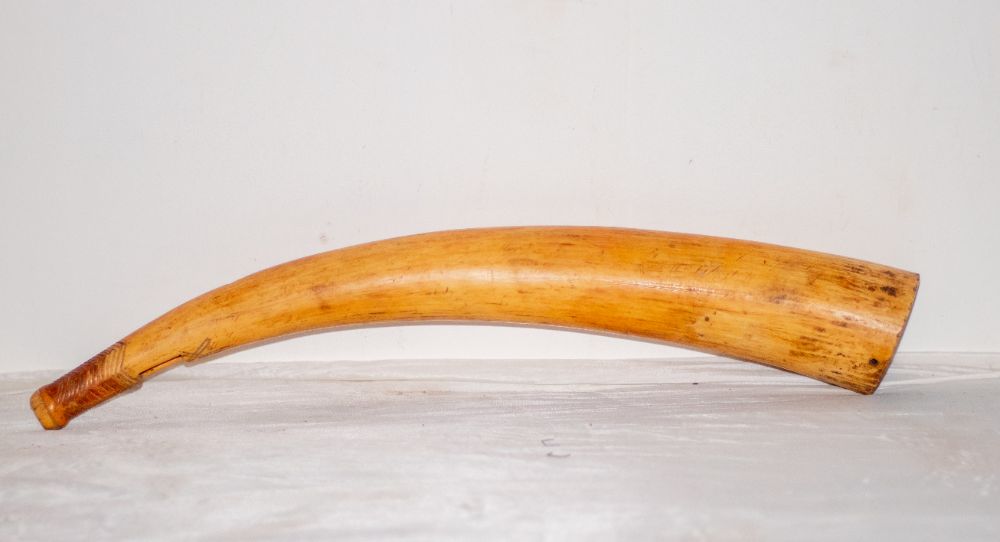
The horn
The stool
Room 05 — Oral histories
Voices of the ridge
Recordings are being gathered now with elders in Akropong. These are the first four sittings — press play to imagine the room.
Growing up on the High Street
Elder sitting 01 — recording in progress
12:40
How Odwira week unfolds
Elder sitting 02 — recording in progress
18:05
Market day, before the road came
Elder sitting 03 — recording in progress
09:22
A story from the stool house
Elder sitting 04 — recording in progress
15:47
Room 06 — The sister-city story
How two towns shook hands
2003
Shoreline
Shoreline, Washington signs its first sister city: Boryeong, South Korea.
2010–23
Shoreline
The relationship goes quiet; in 2024 the council formally closes the program.
2024
Shoreline
A councilmember proposes something new: a sister city relationship with Akropong, Republic of Ghana — built around culture, education, economic opportunity and sustainability.
2025
Akropong
On the ridge, community leaders begin organising under the auspices of the traditional authority.
2026
Akropong
The Akropong Sister City Association adopts its constitution — non-profit, non-partisan, open to all — and gets to work.
Next
Both
Registration, first exchanges, and this museum growing room by room. The handshake becomes a habit.